Tuesday, 19 June 2018

How to Translate Webpages in Safari for iPhone and iPad

How to Translate Webpages in Safari for iPhone and iPad

Though both the apps are up to the mark, we have found Microsoft Translator pretty easy-to-use and right on the money. It supports text translation in as many as 60 languages. The other notable features of this app include voice translation, multi-person conversation, phrasebook for verified translations, etc. Thoroughly impressed by its neat functionality, we’re going to use it in this tutorial.

Add Microsoft Translator Browser Extension to Safari on iOS Device

To get started, you need to first add Translator browser extension to Safari.
Step #1. First off, download Microsoft Translator on your iOS device. Then, open Safariand tap on the share button.
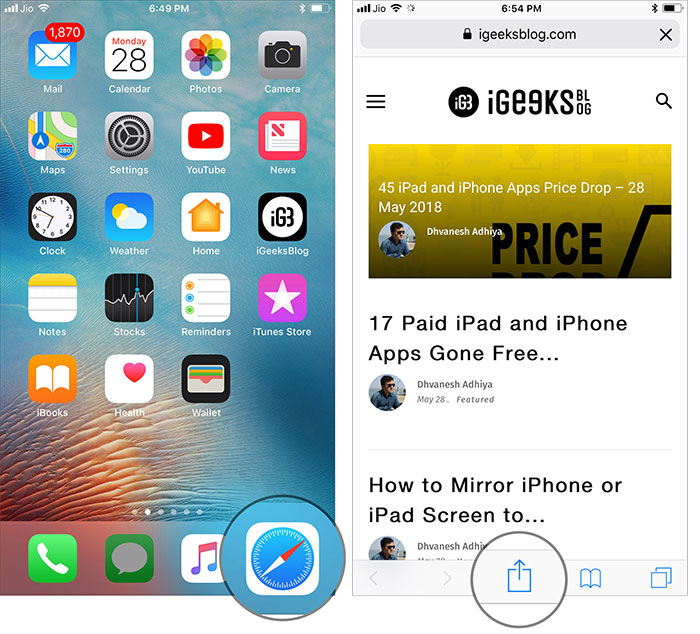
Open Safari on iPhone and then tap on Share button
Step #2. Now, swipe left in the Activities row and tap on More button.
Tap on More button in iPhone Activities section
Step #3. Next, toggle on the switch next to your Microsoft translator app. Then, make sure to tap on Done button to confirm the change.
Sponsored Links
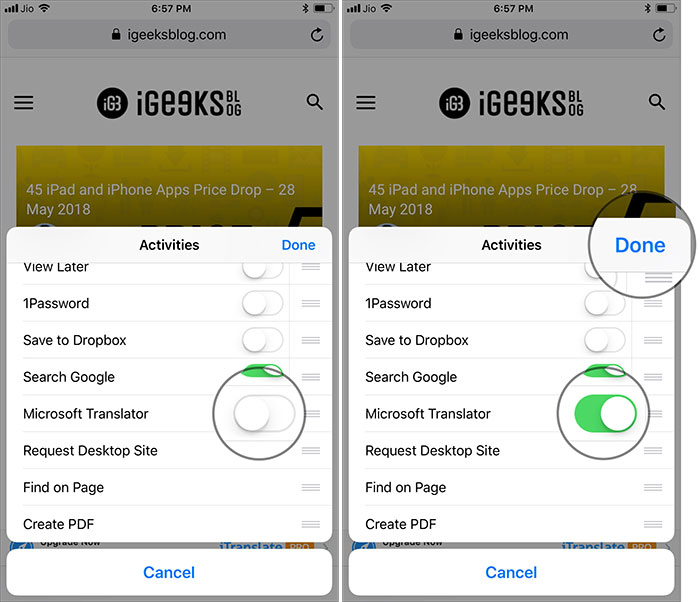
Turn ON the Switch next to Microsoft Transletor on iPhone
If you want to often use the app, simply drag it at the top so that you can quickly access it in the activities row.
All set? You may want to choose your preferred language. To do so, simply open Microsoft Translator app and tap on Settings icon at the bottom right corner.
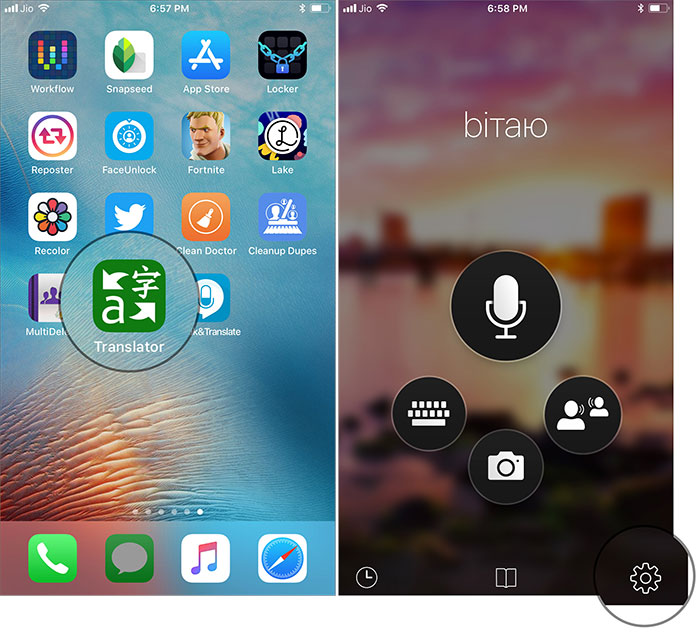
Open Microsoft Translator App on iPhone and Tap on Settings
Then, tap on Safari Language Translation and select the desired language.
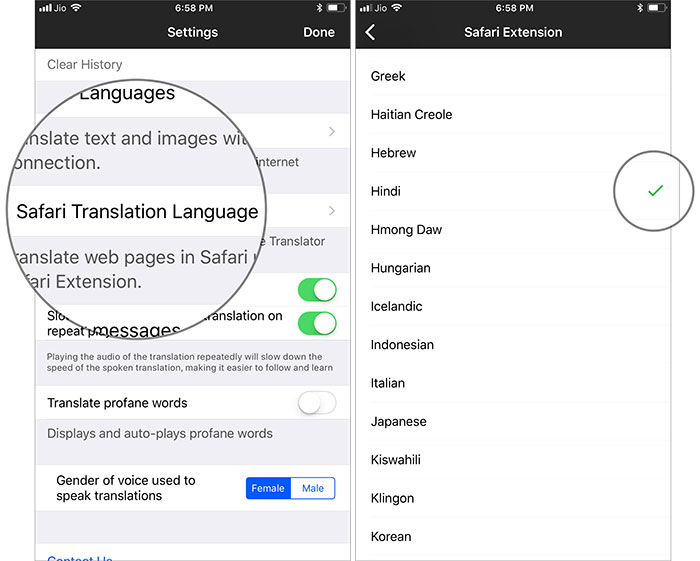
Tap on Safari Language Translation and Select language in Microsoft Translator iOS app

Translate Webpages in Safari

Step #1. Launch Safari on your iOS device.
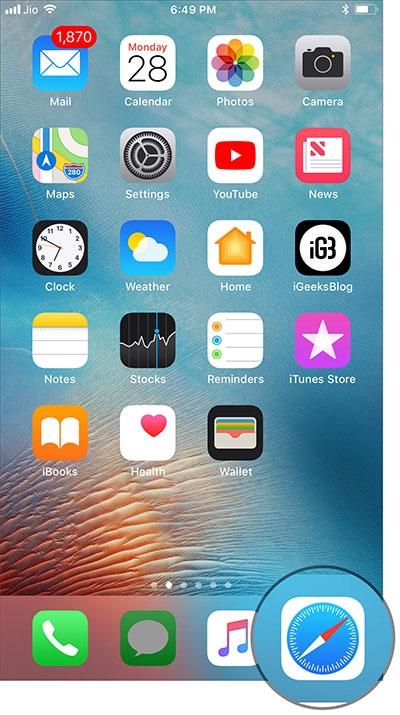
Open Safari App on iPhone
Step #2. Now, head over to the site which article you want to translate.
Step #3. Next, tap on the share icon at the bottom.
Gihosoft iPhone Data Recovery is a professional iPhone Data Recovery software to get back all your lost text message, photo, video, call history, note, contact and more from iPhone/iPad/iPod Touch. It offers a full solution to recover your lost data in different tough situations. Besides recovering data directly from iPhone, iPad and iPod touch, it also allows you to recover data from iCloud and iTunes backup files.

Tap on Share icon in Safari on iPhone
Step #4. Next up, select Microsoft Translator.
Select Microsoft Translator to Translate Webpages in Safari for iOS
Voila! Check out now, the webpage has been translated into your preferred language. You can repeat the same steps to translate other webpages.
Over to you:
From now onwards, use this highly user-friendly app to prevent the foreign language from becoming a barrier. And yes, if you come to know any other translators that work perfectly with Safari, do let us know about them as well.

Alternatives to The Best iPhone Contact Manager App


Alternatives to The Best iPhone Contact Manager App

  • Smart Merge Pro
  • Connect – Contact Manager
  • Groups

Smart Merge Pro

Find more details about this app below.
smart-merge-go

Features of this App

  • Find and merge duplicate contacts
  • Quickly find contacts
  • One tap backup your contacts
  • Remove contacts without phone number of name

Pros of this App

  • It allows you to merge all duplicate contacts and delete them with single tap.
  • It allows you to remove all the contacts you do not need.
  • It enables you to quickly find all the contacts you need.

Cons of this App

  • It is not a free app.
  • You must subscribe yearly to continue using the app.

Connect – Contact Manager

Find more details about this app below.
connect-contact-manager

Features of this app

  • Customized group chats
  • Easy to use interface
  • Group chats and messaging
  • Add and Share Contacts feature  
  • Multi-search feature

Pros of this App

  • It is easy to use.
  • It has a clean interface free of pop-ups and ads.
  • It allows you to send group SMS as well as group emails.

Cons of this App

  • The contact group you create does not synchronize back to your iPhone’s contact list.
  • This app does not use iCloud Drive or any other cloud service.

Groups

Find more details about this app below.
groups-for-iphone

Features of this App

  • Manage your iPhone contacts
  • Find your contacts easily

Pros of this App

  • It easy to create groups and add a contact to the multiple groups.
  • It allows you to mail merge the first name of your recipients into a mass text.
  • It auto corrects your text before you can send.

Cons of this App

  • It does not show a contact if the contact is in a company’s name.
  • It automatically deletes some group members without a reason or notifying you.Gihosoft iPhone Data Recovery is a professional iPhone Data Recovery software to get back all your lost text message, photo, video, call history, note, contact and more from iPhone/iPad/iPod Touch. It offers a full solution to recover your lost data in different tough situations. Besides recovering data directly from iPhone, iPad and iPod touch, it also allows you to recover data from iCloud and iTunes backup files.


Saturday, 16 June 2018

5 Tips for Managing One to One iPads Midnight Music

Guest author: Katherine Miller

This article has been written by a guest author.  If you’re an educator or music industry professional who is interested in contributing an article to the Midnight Music blog, you can apply here.
In my first 12 years of teaching, the access to technology in my music room has been slowly increasing. Many times it was far behind the access other teachers in the school and district because school leaders questioned how technology would be used in music.  

I was thrilled to be hired by a district in Waukesha, WI, USA that supplied 1:1 devices to students so I could start exploring and meet the challenge of figuring out how technology could enhance and better an elementary music program.

Here are 5 tips for managing 1:1 devices in the music room:

1. Expectations for iPad Use

Make sure that students are explicitly taught the expectations for using technology in your classroom as you would with any other classroom expectations. One way to do this is by using the Responsive Classroom strategy of creating a Y-chart to have students generate ideas about what using iPads in the music room will look, sound and feel like.  Make sure to refer to your school’s technology plan to reinforce any school community and digital citizenship agreements that are expected of students.
Once expectations are established, model and practice these expectations before starting a project including what will happen if a student chooses to not follow them.

2. Develop routines

Developing consistent routines when using student iPads is important. Make sure you have thought through what routines students will need to know when their iPad comes into your classroom. Will students bring their iPad every day? Where will they put their iPad once it is in your room? How will you get their attention once they have their device out?
In my classroom, I let classroom teachers know through email if students will be needing their device for music on any given day. Students have modeled and practiced putting their devices directly into a set of mailboxes when they enter the room before participating in any warm up activities. We do this every time they have their device.

Our school also utilizes a common phrase, “apples up”, when students have their iPad out but the teacher wants their eyes and attention focused on them. This is a clear message that their iPad needs to be upside down with the Apple logo facing up. Developing routines can be even more valuable if they are adopted and supported throughout the entire school building.   This provides clarity and consistently as students travel from classroom to classroom.

3. Communicate the purpose of using student devices

Be explicit when instructing students about their purpose for utilizing technology. Include clear objectives about what a student should do or know at the completion of their work. Also include what apps or locations they will need to access on their device and clearly communicate that to students. For example, saying “You should only be working Book Creator today. You do not need to access your camera roll but instead can use the plus button to grab the pictures you need” or “What apps might you need to use in order to complete your work? What apps won’t you need?”

4. Apple Classroom

As we all know, even the best laid plans don’t always go perfect! Apple Classroom is an app that allows you to hold students accountable to the expectations, routines and objectives of your lesson using their iPad. Apple states, “Classroom turns your iPad into a powerful teaching assistant, helping a teacher guide students through a lesson, see their progress, and keep them on track. With Classroom, you can easily launch the same app on every student device at the same time or launch a different app for each group of students. Classroom helps teachers focus on teaching so students can focus on learning.”

In my classroom, I project my Apple Classroom screen onto the board. Students know that as a classroom community we are holding each other to the agreements that were made in regards to using technology as a learning tool. This also allows me, as the teacher, to focus less on “policing” technology expectations and focus instead on how I can help guide and challenge them to go further in their thinking in the product they are creating on their technology.

I also love Apple Classroom as a teaching tool. As the teacher in Apple Classroom, I can choose one student’s work to display to the class to help to encourage deeper thinking or challenge common misconceptions I am seeing in student work. My students love to see their work projected!

5. Creativity

I love that students have a natural curiosity about the world but when using their own device this can sometimes lead to being off task. In order to focus this natural need,  I try to include as many choices in what students are doing as I can.

If students are recording, is it possible to do one “nice” recording that you can use to assess in tune singing and then create one where students can utilize the “fun” options in the GarageBand recorder?

Can students demonstrate their learning by drawing, writing or performing into a specific app? Could you make a few choices for them – like WHAT needs to be included in their work – but allow students design HOW they will be included (such as arranging in NoteFlight)?
Allowing for creativity can also take your original objectives to a whole different level! I find students often discover or use technology in a way that I had never thought of to create things I didn’t even know were possible!

About the Author
Katherine (Katie) Miller holds a Bachelor of Music in Education degree from Otterbein University (Westerville, OH) and a Masters of Educational Leadership from Antioch McGregor Midwest (Yellow Springs, OH). She has 14 years of professional musical experience as a music educator and performer.

She is currently employed by the School District of Waukesha in Waukesha, WI where she serves teaches K-5 General Music and serves as a district model tech classroom.Sponsor Ads:
Gihosoft iPhone Data Recovery is a professional iPhone Data Recovery software to get back all your lost text message, photo, video, call history, note, contact and more from iPhone/iPad/iPod Touch. It offers a full solution to recover your lost data in different tough situations. Besides recovering data directly from iPhone, iPad and iPod touch, it also allows you to recover data from iCloud and iTunes backup files.


Pin5


Import Old Backups to iTunes When Music Lost


Import Old Backups to iTunes When Music Lost

If you have an old backups of iTunes that contains your lost music and you want to import this old iTunes backup music to the current iTunes that you use. You can do that if you have a backup on your computer or a hard drive, so the backup need to be available on your computer or external drive connected to your computer. We will show you now how to do it.

#1. iTunes Lost My Music? Import them from Old Backups on PC

Step 1. Find out where is your old iPhone backups and then copy the music to another folder. This folder can be created on the desktop where is easily to be found.
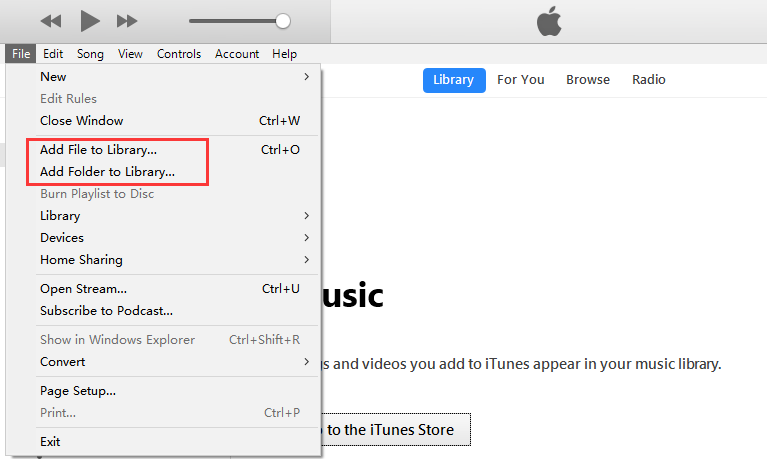
Step 2. Open iTunes. Click "File" on the upper left corner. And then choose "Add File to Library" or "Add Folder to Library".
transfer-files-from-pc-to-itunes
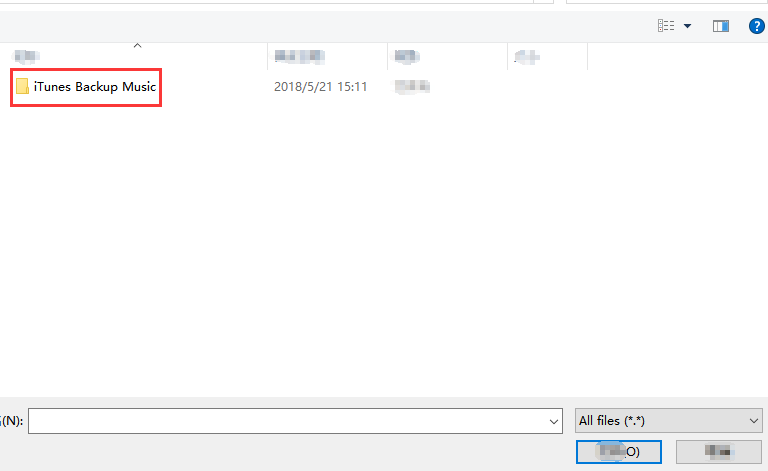
Step 3. Locate the music files or the music folder where you create on desktop.
Step 4. Click "Open". The music will be import to your iTunes Libarary. And now you get your iTunes Back.

#2. Transfer iTunes Backups from External Drive to iTunes

Step 1. Attach the external hard drive that contains the old iTunes backup to the computer.
Step 2. Navigate through the hard drive to find the iTunes music folder you backed up to it.
Step 3. Drag the iTunes music folder from the external hard drive to the desired location on your computer. In some cases, you may need to put it in the default location used by iTunes.
copy-music-on-pc
Step 4. While holding down the Option key on a Mac, or the Shift key on Windows, launch iTunes.
Step 5. Click "File > Add File to Library or Add Folder to Library” which is same as the last method.
transfer-files-from-pc-to-itunes
Step 6. In this windows, you can browse through the folder that you copied from the external hard drive. On Windows, select the music file in the folder.
Gihosoft iPhone Data Recovery is a professional iPhone Data Recovery software to get back all your lost text message, photo, video, call history, note, contact and more from iPhone/iPad/iPod Touch. It offers a full solution to recover your lost data in different tough situations. Besides recovering data directly from iPhone, iPad and iPod touch, it also allows you to recover data from iCloud and iTunes backup files.

locate-music-folder
Step 7. Now click “Open
Step 8. When it finish. You can now disconnect the external hard drive from your computer.

Apple Releases macOS Catalina 10.15.1 Third Developer Beta

Apple has released macOS Catalina 10.15.1 third developer beta. As expected the third developer beta of macOS Catalina focusses on bug fixes...